PackMule
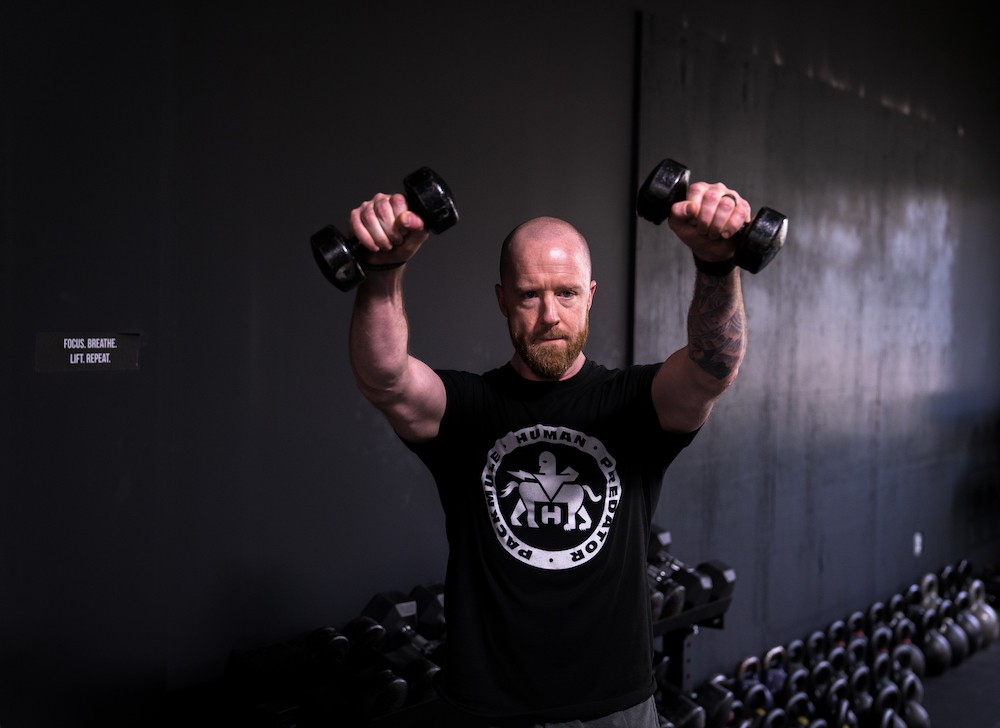
How Should Hunters Warm-up for Strength Training?
Does this sound familiar?
You jumped into a strength training session without an adequate warm up. Then during the session you dinged up your shoulder or felt a strain in your back. Maybe your hip started acting up.
How'd I do?
Well, you're not alone. It's happened to most hunters that lift. Hell, it's happened to most people that lift. But the thing is, it ain't gotta happen. An adequate warm-up helps you avoid those dings and strains while also improving your performance during your workout.
The warm-up needs to do three things for you:
Increase your active joint range of motion
Excite your nervous system
Increase your body heat
Increasing active joint range of motion helps you get into better, stronger, and safer positions while you lift.
Exciting your nervous system increases access to strength. Your nervous system must be primed for output for you to get the most out of it.
And increasing your body heat activates the enzymes that help you use energy. That's a very good thing.
So, now you need a warm-up that does all that for you. Well, I have that for you.
Check out the video below. It walks you through the entire warm-up we use as part of every Backcountry Ready training session.
Feel free to use it. But, please, at the very least, use the principles to create your own strength training warm up.
Here's that video:
Do this warm-up before every training session.
You'll be surprised how quickly you feel better and how much your training improves.
Speaking of training. Have you checked out Backcountry Ready yet?
Recent posts
Related Articles

Mental Skills
May 12, 2026
How to Get More Out of Yourself with Good Self-Talk
Self-talk either makes or breaks our performance while also shaping our internal landscape and our identity. However, most hunters struggle with self-talk, especially during hard workouts and tough days in the mountains. They tend to talk to themselves like an enemy instead of a friend. The rise of positive psychology has also caused self-talk problems. It often motivates people to tell themselves flowery lies. Neither negative nor unrealistically positive self-talk works. Honest, instructional self-talk does.

Fitness Tips
Apr 30, 2026
Know How Hard You're Training: How to Condition Without a Heart Rate Monitor
The chest strap heart rate monitor is a great tool. I think every hunter who’s serious about improving their endurance should own one and use it during most conditioning sessions. But sometimes we head out the door and forget to toss it in the truck. And other times, it’s just not practical, like when we’re hunting but still want to keep tabs on how hard we’re working so we don’t gas ourselves out. Each of those scenarios requires us to learn how to dial in on how hard we’re training using feedback from our bodies instead of following the heart rate read out from our chest straps.

Nutrition
Apr 19, 2026
Fueling for Long Rucks, Runs, and Hikes
As a hunter, you’re a strength-endurance athlete. That means you need to eat and fuel more like an endurance athlete than a regular person who likes to go to the gym and workout. You’re training, not working out. Training requires a sound nutritional strategy.

Mental Skills
May 12, 2026
How to Get More Out of Yourself with Good Self-Talk
Self-talk either makes or breaks our performance while also shaping our internal landscape and our identity. However, most hunters struggle with self-talk, especially during hard workouts and tough days in the mountains. They tend to talk to themselves like an enemy instead of a friend. The rise of positive psychology has also caused self-talk problems. It often motivates people to tell themselves flowery lies. Neither negative nor unrealistically positive self-talk works. Honest, instructional self-talk does.

Fitness Tips
Apr 30, 2026
Know How Hard You're Training: How to Condition Without a Heart Rate Monitor
The chest strap heart rate monitor is a great tool. I think every hunter who’s serious about improving their endurance should own one and use it during most conditioning sessions. But sometimes we head out the door and forget to toss it in the truck. And other times, it’s just not practical, like when we’re hunting but still want to keep tabs on how hard we’re working so we don’t gas ourselves out. Each of those scenarios requires us to learn how to dial in on how hard we’re training using feedback from our bodies instead of following the heart rate read out from our chest straps.